
Birding in Tanzania
I went to Tanzania to climb Mount Kilimanjaro and for a safari to see the megafauna of Africa, the "Big 5" and others as they say. Birding was a lower priority, but being on a new continent for the first time and in a country with an amazing diversity of biomes, the birding didn't disappoint. It was nothing short of fantastic. Everywhere I looked there were new species, in fact, whole new taxonomic families of birds that I had never seen before.
Now, three months later, I'm still going through my photos and am sure there's a few more new birds hidden in a couple of my photos that I've yet to review and identify. Overall, I added 158 birds to my life list and over a dozen new whole families of birds. The diversity of birds was absolutely incredible. I expected that diversity in the tropical forests where I only got to spend two days, but even on the plains of the Serengeti the diversity was outstanding. The overall biomass is just so high that it allows for a continued proliferation of specialization and species diversification. I added 5 new stork species and at least 15 vulture, hawks, and allies to my life list in just my first day in the Serengeti.

Lilac-breasted Roller
The start of my journey began in Arusha, Tanzania one of the few large cities in the country. Even here in the city, birds were everywhere. There were a few birds I was really hoping to see: Sunbirds, Bee-eaters, Rollers, and of course, Ostriches. There weren't any ostriches, naturally in the city, but in my first hour after waking up on day 1 rather jet lagged, I managed to find my first Sunbird and by the end of the day added 20 or so new species just in an hour or two roaming around the hotel grounds.
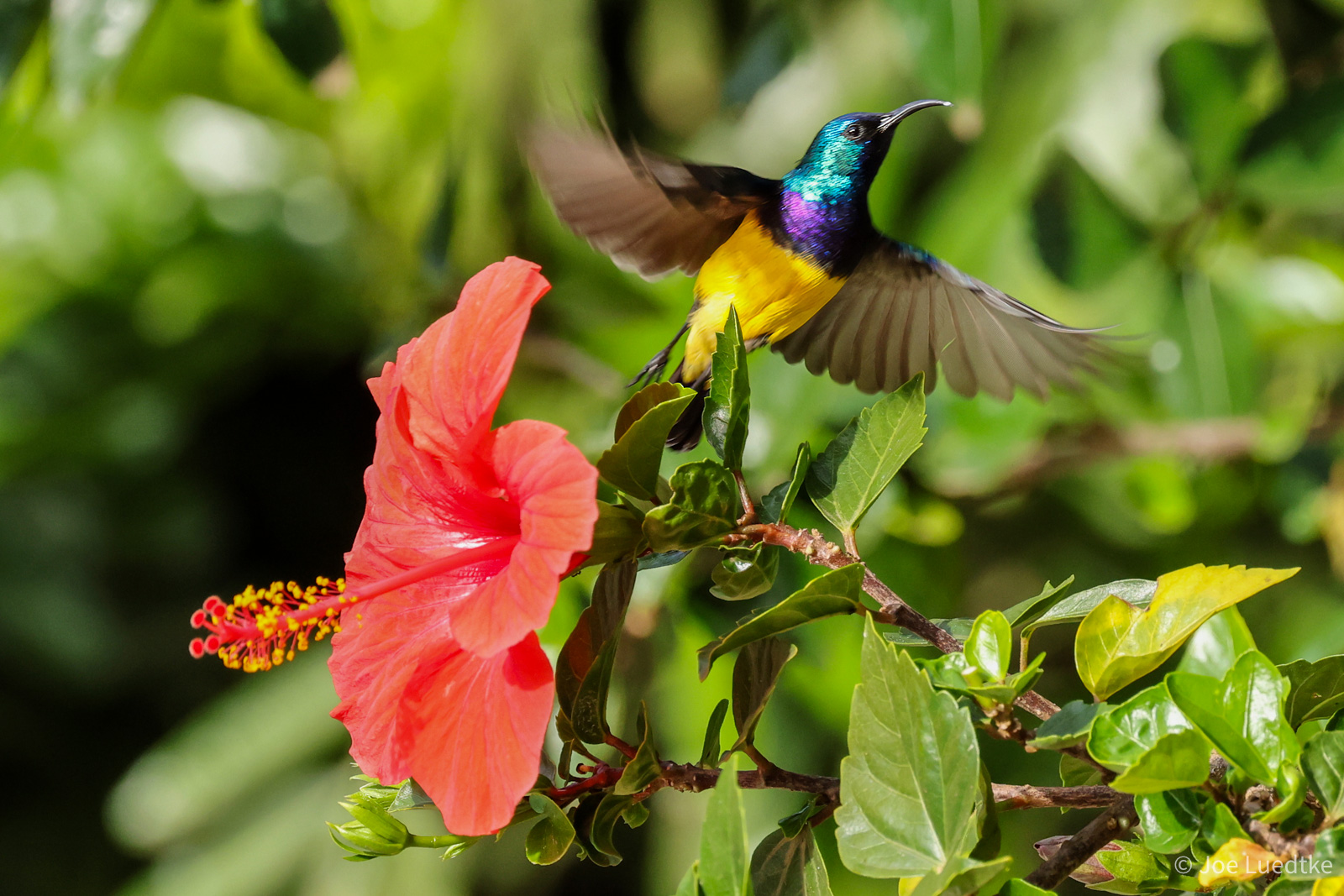
Sunbirds are Africa's answer to hummingbirds and a classic example of convergent evolution. They look like Hummingbirds (kind of), behave like hummingbirds, but are not closely related to hummingbirds.
Here a Heron-like Hamerkop stands stoically by a small pond on grounds of the Grand Melia Hotel in Arusha.

Hamerkop resting next to a pond in Arusha, Tanzania
Arriving at the entrance gate to Kilimanjaro National Park, I was immediately greeted with a pair of Cinnamon-chested Bee-eaters. Very flycatcher like in their behavior except for the part about whacking bees on bark tree limb to get the stinger out before they eat them. Very cool to see!

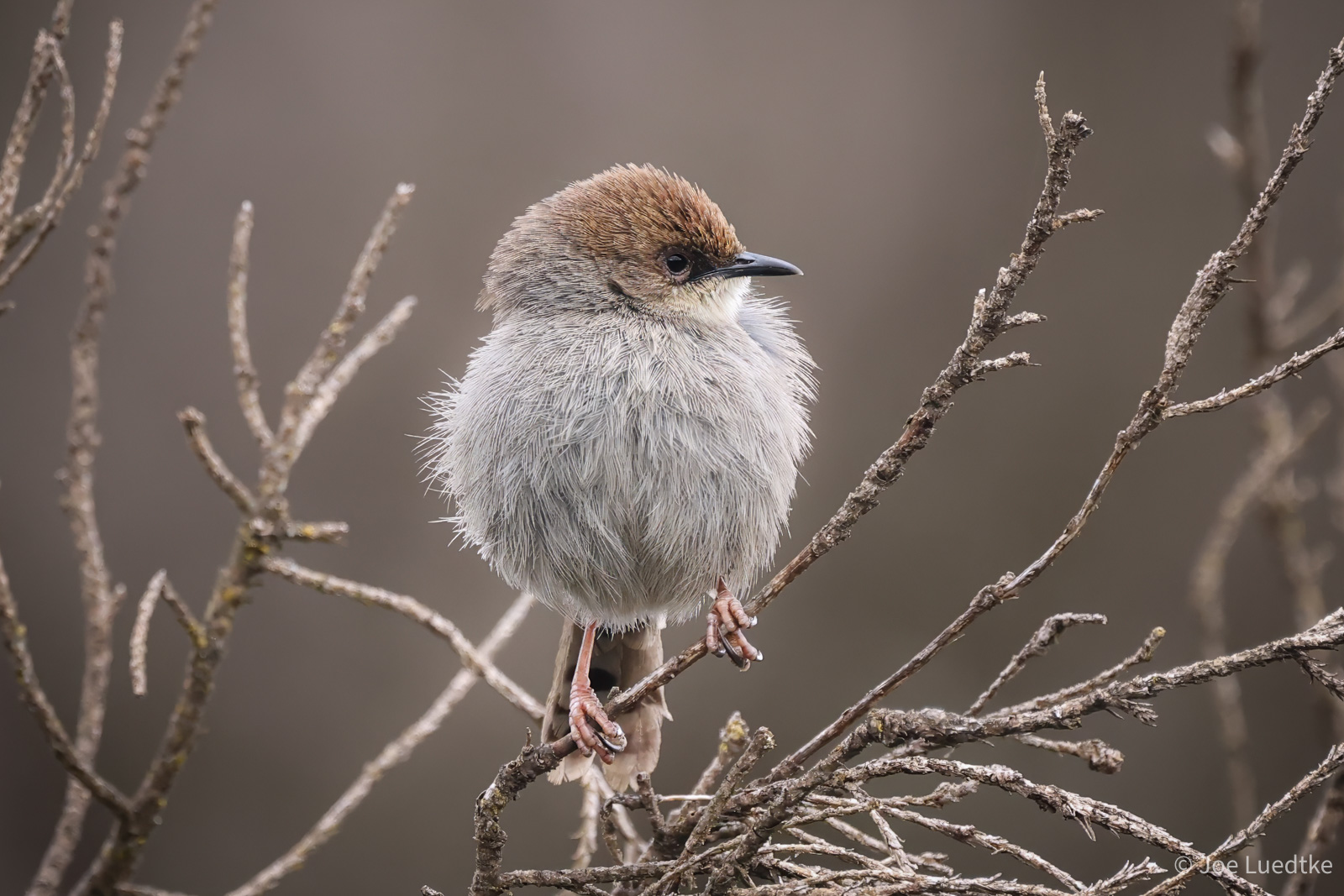
Once out of the rain forest and into the moorlands (western sage-brush like environment), there were only a handful of birds I was able to see. The Moorland Chats (below), African Stone-Chat, Cape Robin-Chat, and Streaky Seedeaters were rather common amongst most of the camps up Kilimanjo. Here's one of the many Moorland Chats hanging around Shira Camp on the way up Mount Kilimanjaro
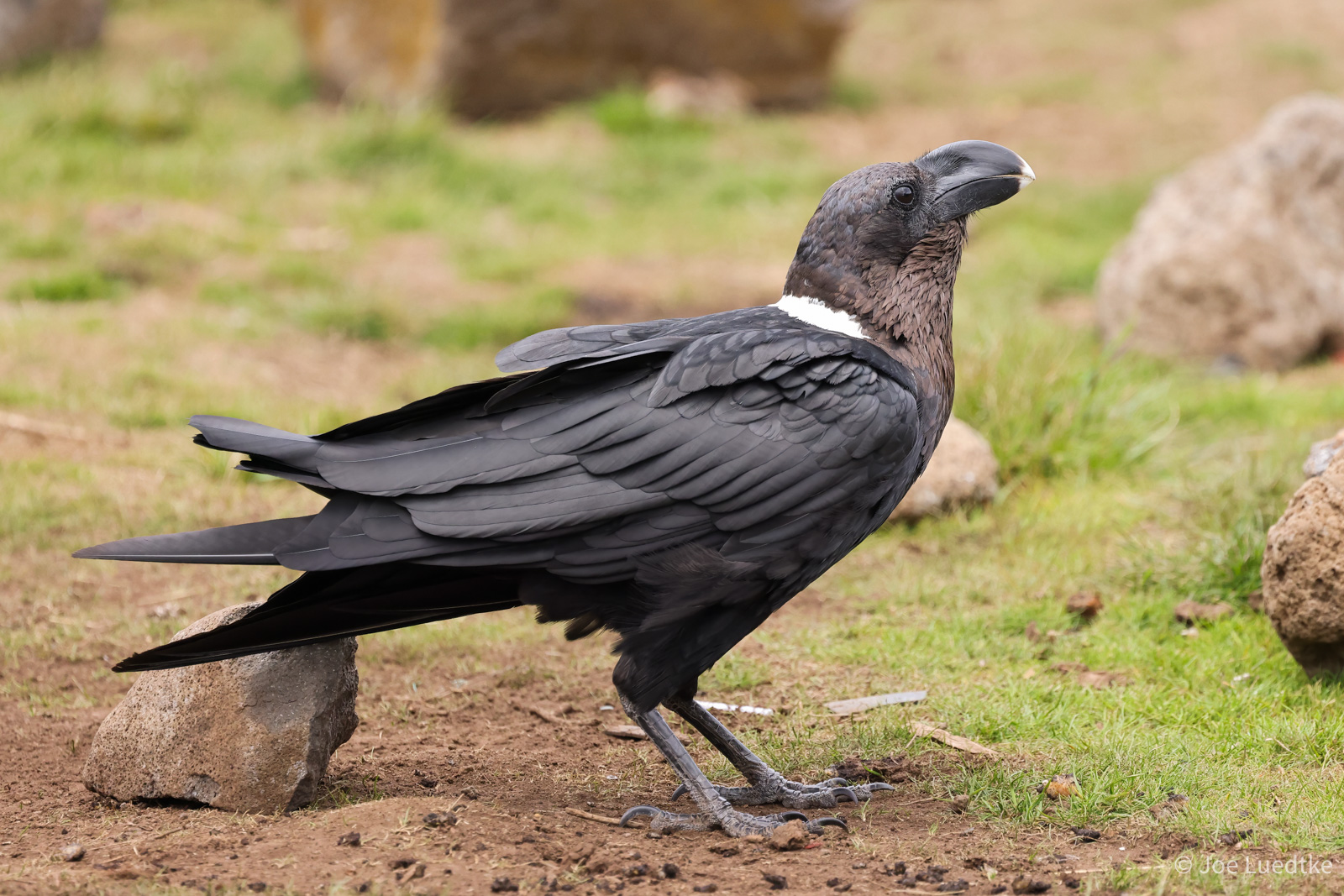
Throughout my hike up Kilimanjaro, the one bird that was with me the whole way were the White-necked Ravens. They were at every campsite and always dancing through the wind and thermals until about 18,000 feet. Above that, I didn't see any although admittedly I was rather tired on focused on just getting to the summit at that point.
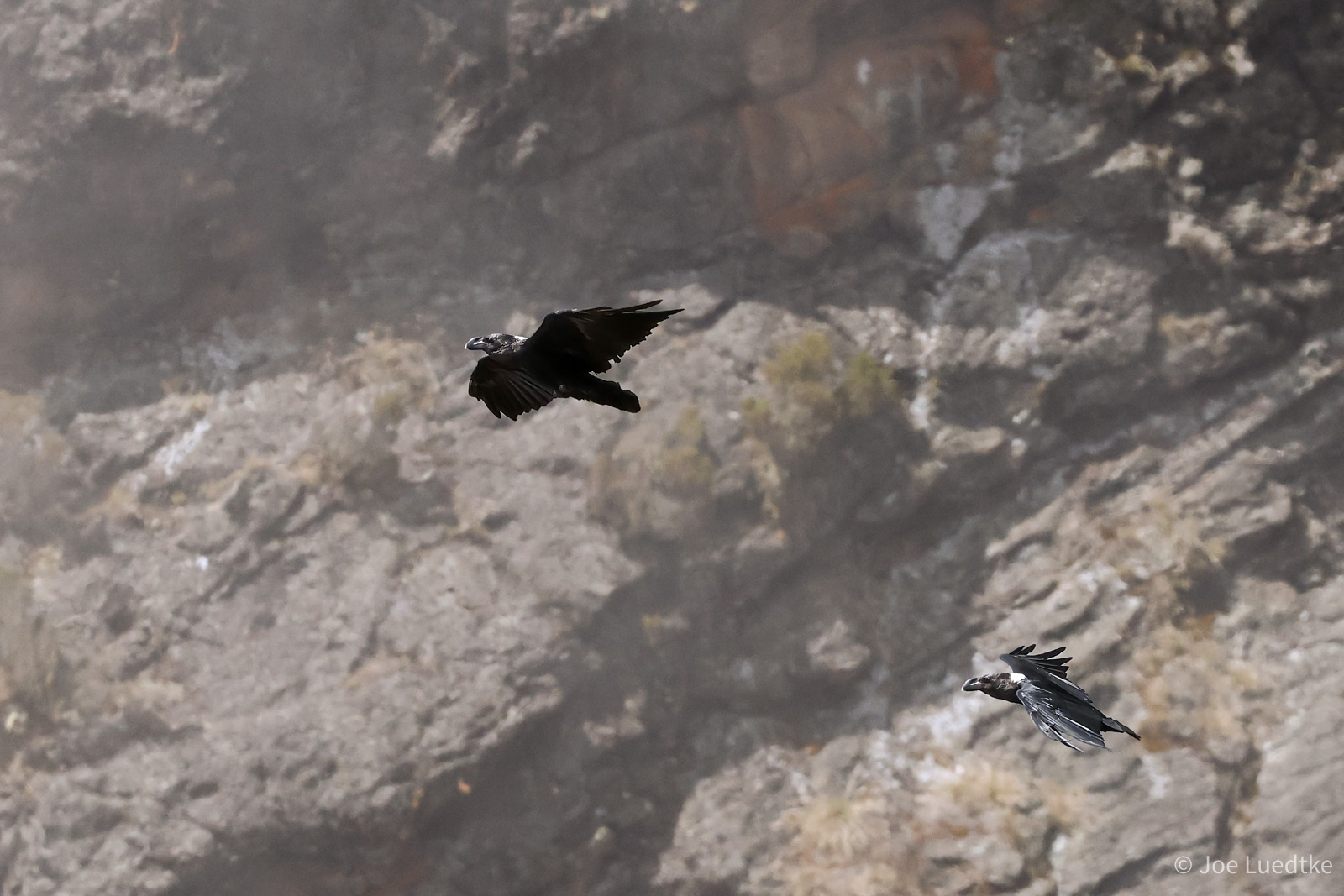
Here a pair of White-necked Ravens glide through the fog and harsh alpine light at Karanga Camp at 13,000 ft.
Back down from the mountain and resting for two days in Arusha before heading to the Serengeti I had time to pick up a few more tropical birds. Here a Northern Fiscal in the Shrike family sits on some reeds.
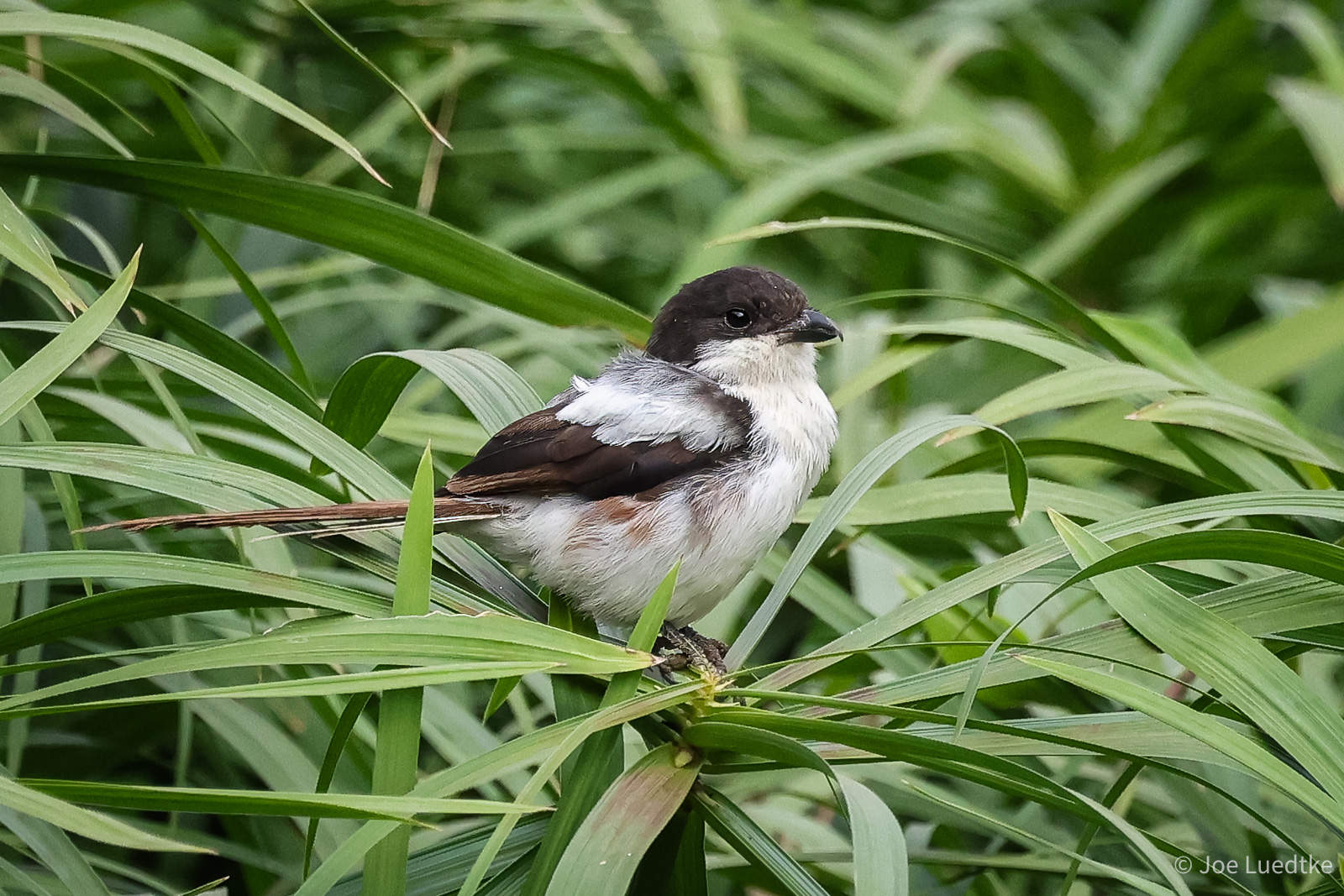
A Northern Fiscal resting on some reeds near a small pond.
Here a Bronze Sunbird alights on a flower in the gardens of the Grand Melia Hotel in Arusha.
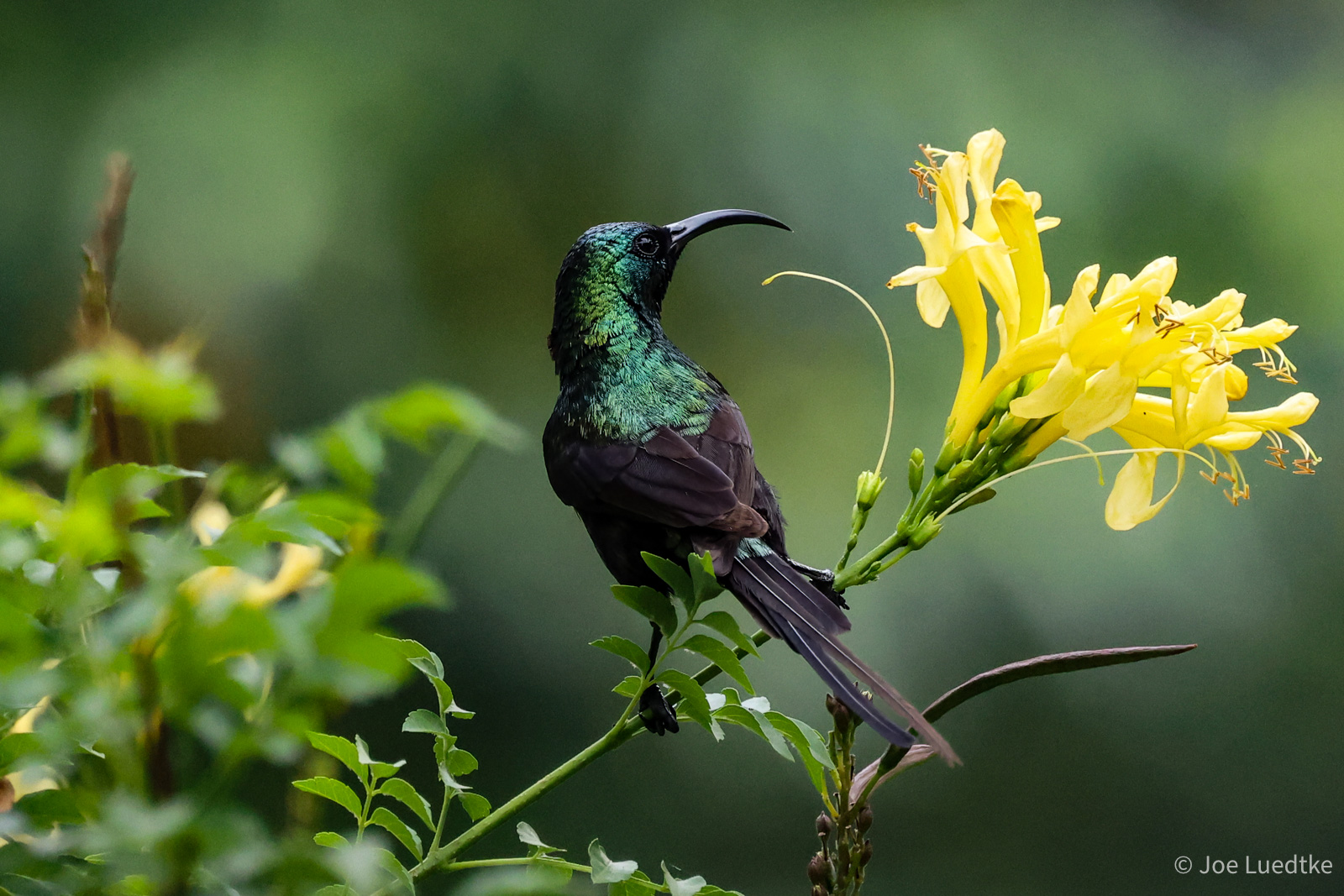
Bronze Sunbird in the gardens of the Grand Melia hotel in Arusha, Tanzania
After a short 2 hour flight, we arrived in Serengeti National Park. Literally smack in middle of the park. There is a small airport in the center of the park and the park would be our home for the next five days. We stayed in a tented camp an hour or so from the airport in the middle of the savannah. You could hear lions roaring at night and we had a few giraffes and a small antelope called the Dik Dik go through our camp one day. We were told in no uncertain terms to never, ever leave our tent under any circumstances at night. I jokingly asked if the canvas walls were lion proof and was simply told, "lions don't enter tents". I nervously took their word for it.
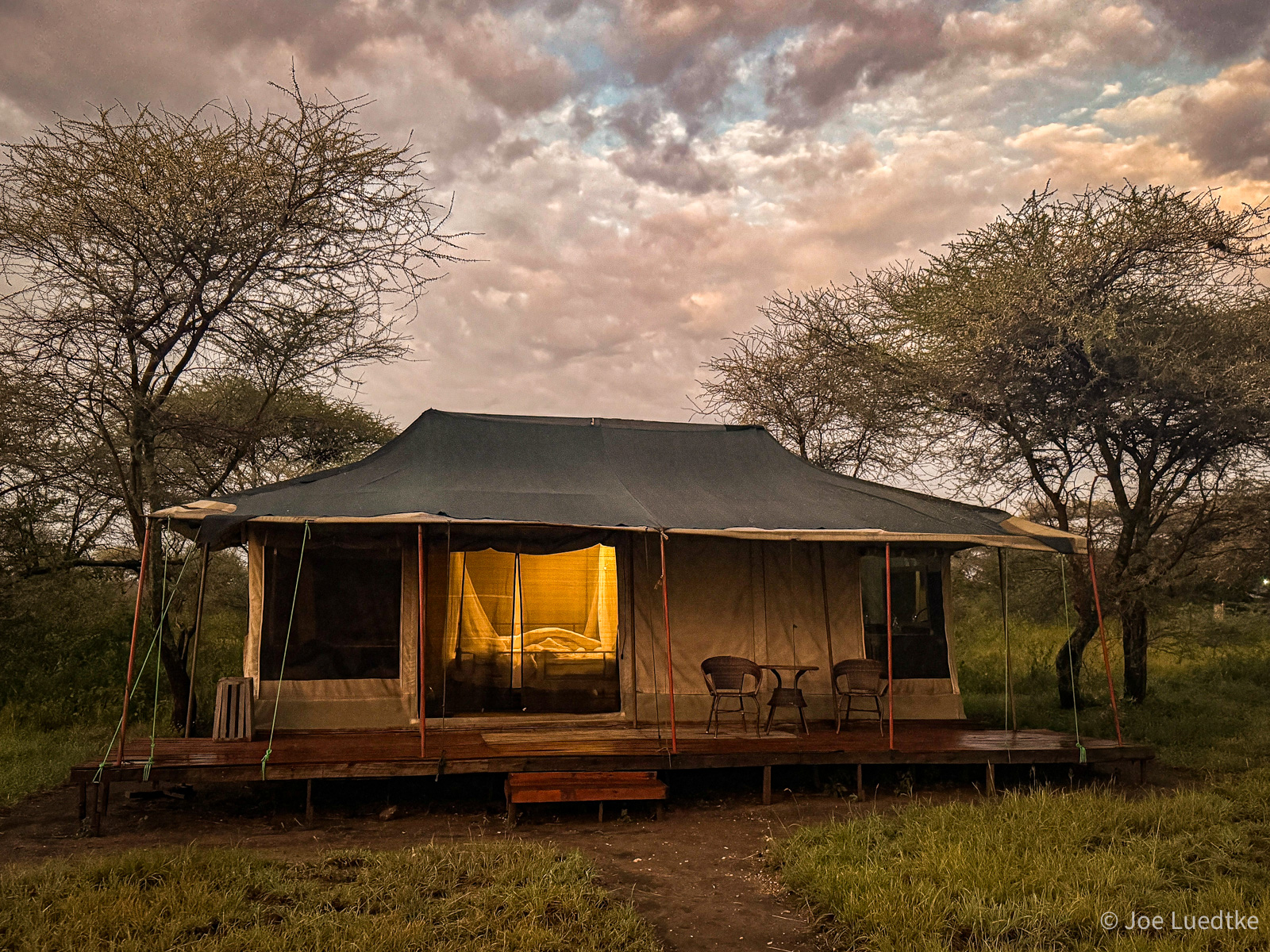
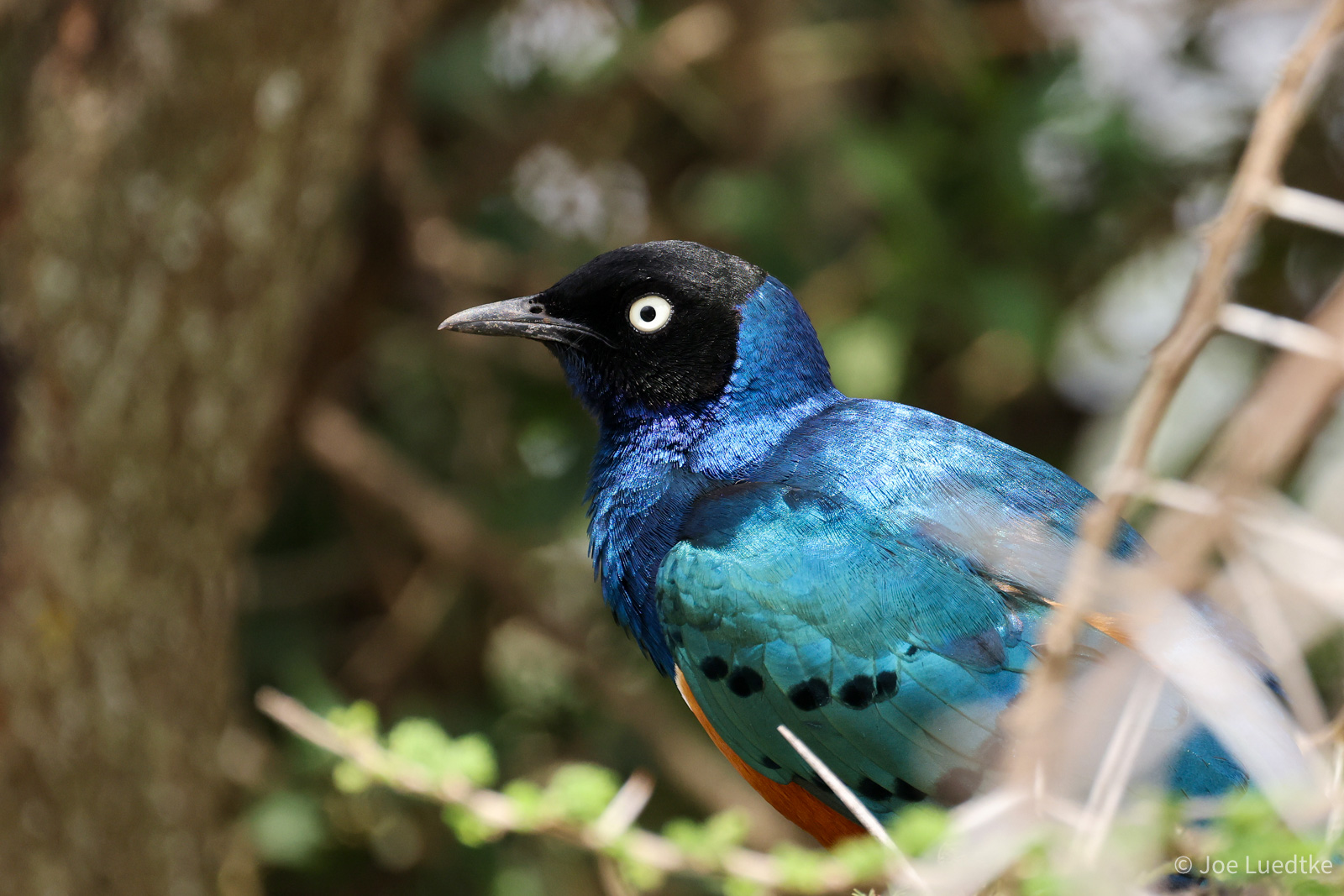
The Serengeti has a color palette of greens, tans, and browns. The colors aren't' dull; they're subtle. Surprisingly many of the birds of Serengeti are anything but subtle. One of the first birds we saw were the Superb Starling. Until that day, i never realized their were other starlings besides the expansive European Starling. My trip to the Serengeti added six more species of Starlings to my life list: Ashy, Hildebrandt's, Red-winged, Rüppels, Superb, and Wattled Starlings were all added to my life list over the next few days.
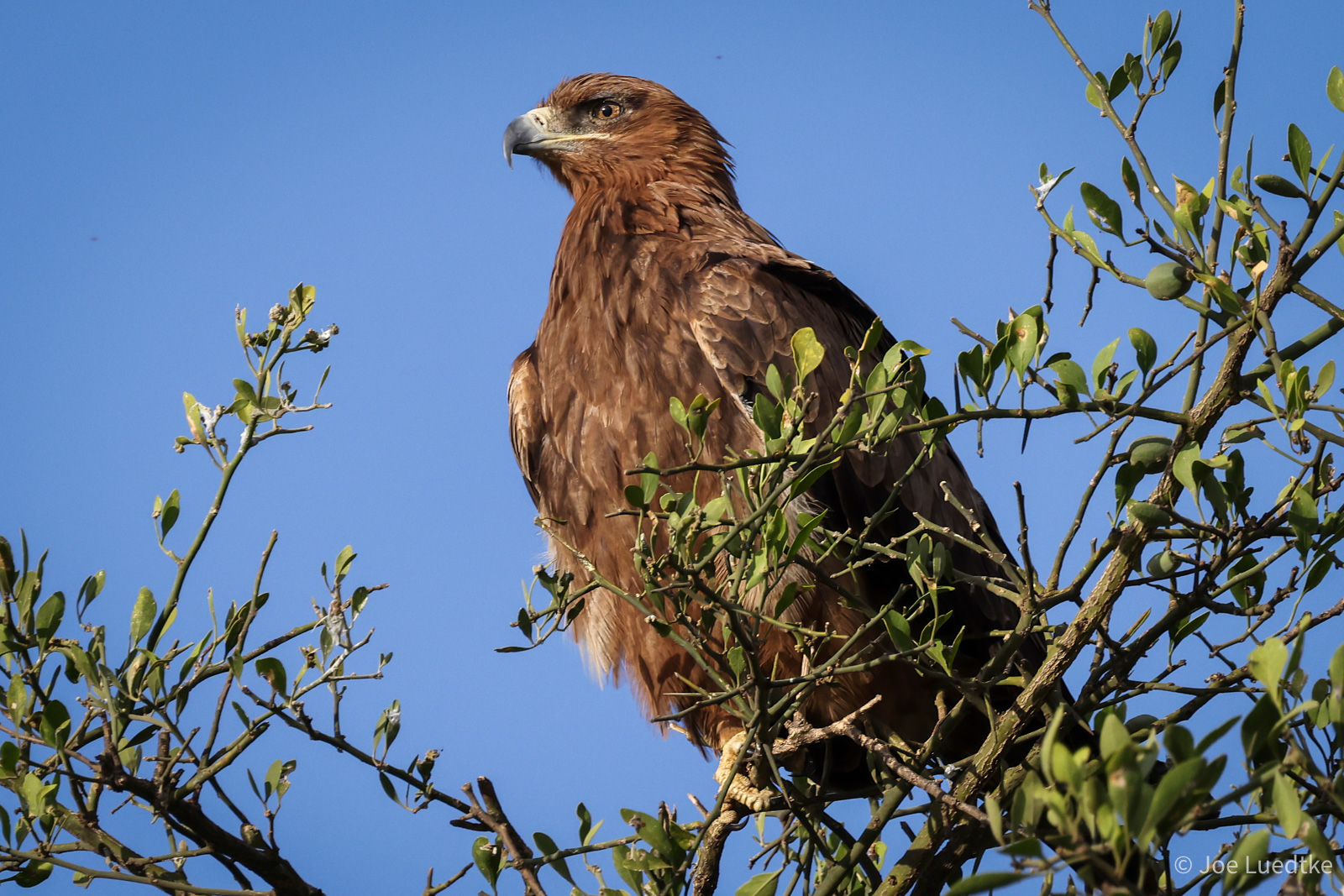
Hawks, Eagles, and Falcons where everywhere. One of the most common birds of prey was the Tawny Eagle here perched in a tree above our car.
Here a Dark Chanting Goshawk is about to take off.
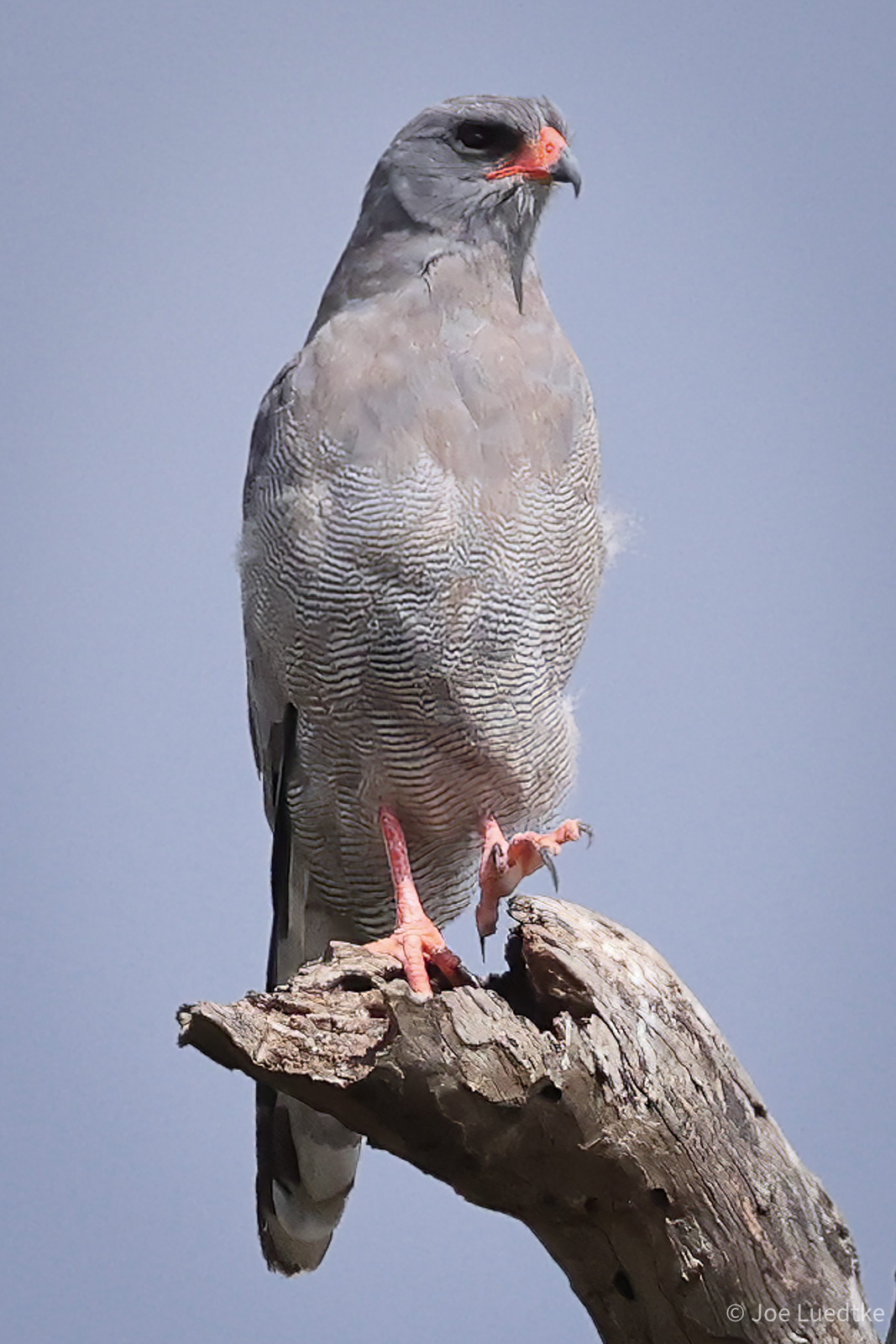
Dark Chanting-Goshawk
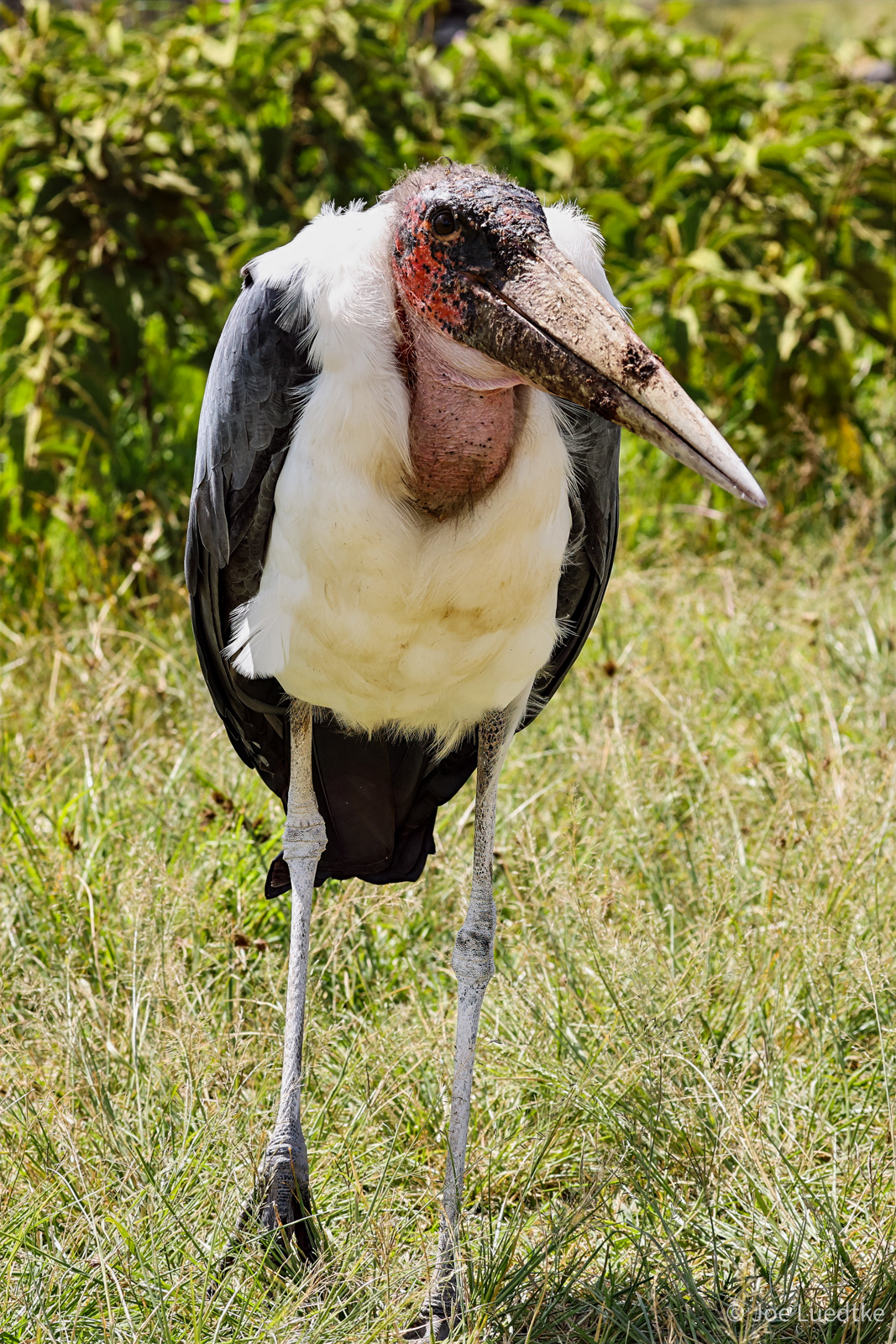
The storks in the Serengeti were an unexpected surprise. We saw multiple Abdim's, Maribou, Saddlebilled, and Yellow-billed Storks with Marbiou being the most pervasive or at least most conspicuous.
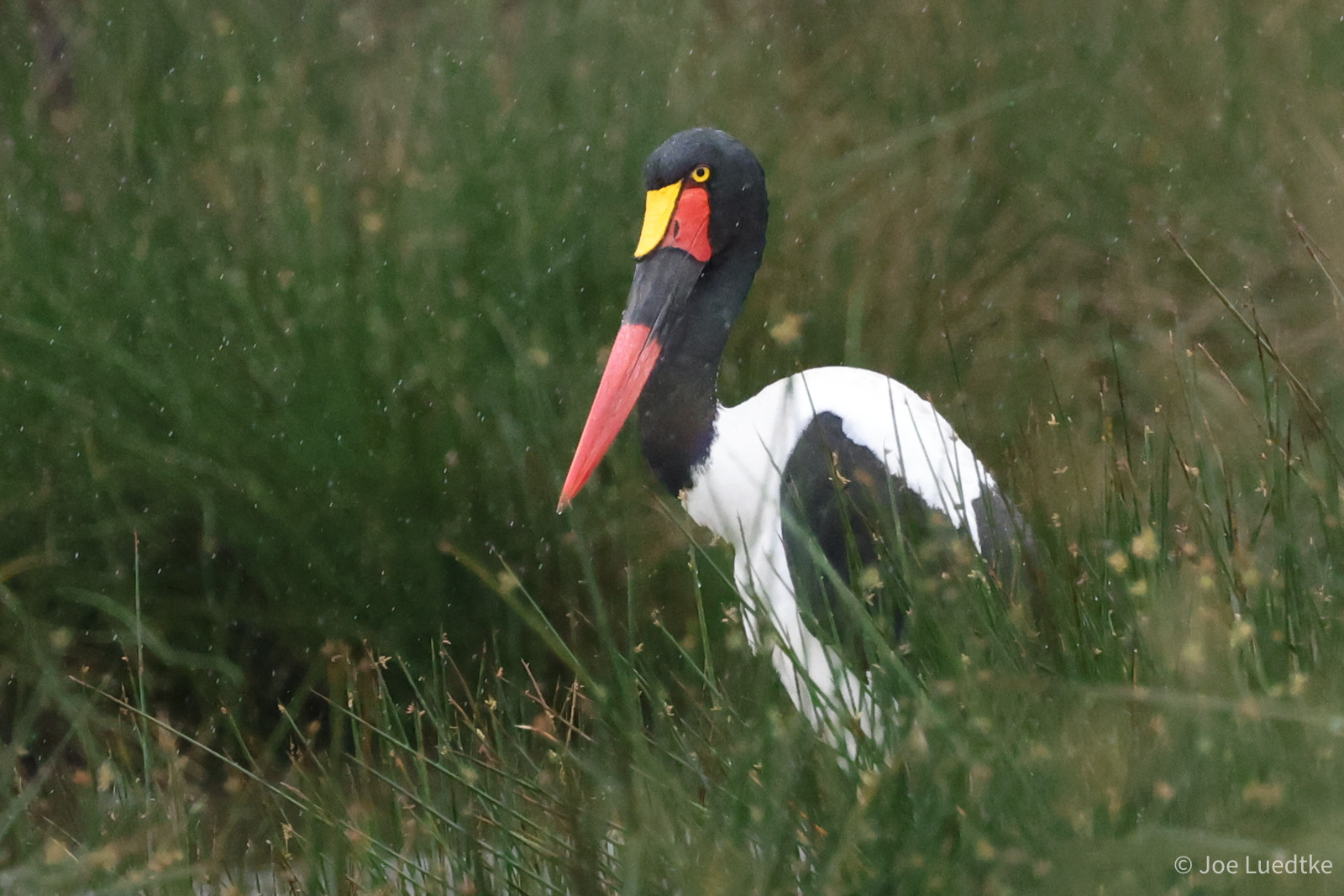
I'm not sure what this Yellow-billed Stork was doing. I didn't capture it mid-attack, but rather it stuck its beak into the water and left it like this for a minute or two. Not sure if it was fishing or not.

The massive Maribou Storks looked like something right out of a Miyazaki movie!
Fantastic and magical. These Pin-tailed Whydahs were difficult to photograph as they moved with the randomness of butterflies, but, oh my, were they amazing to watch!
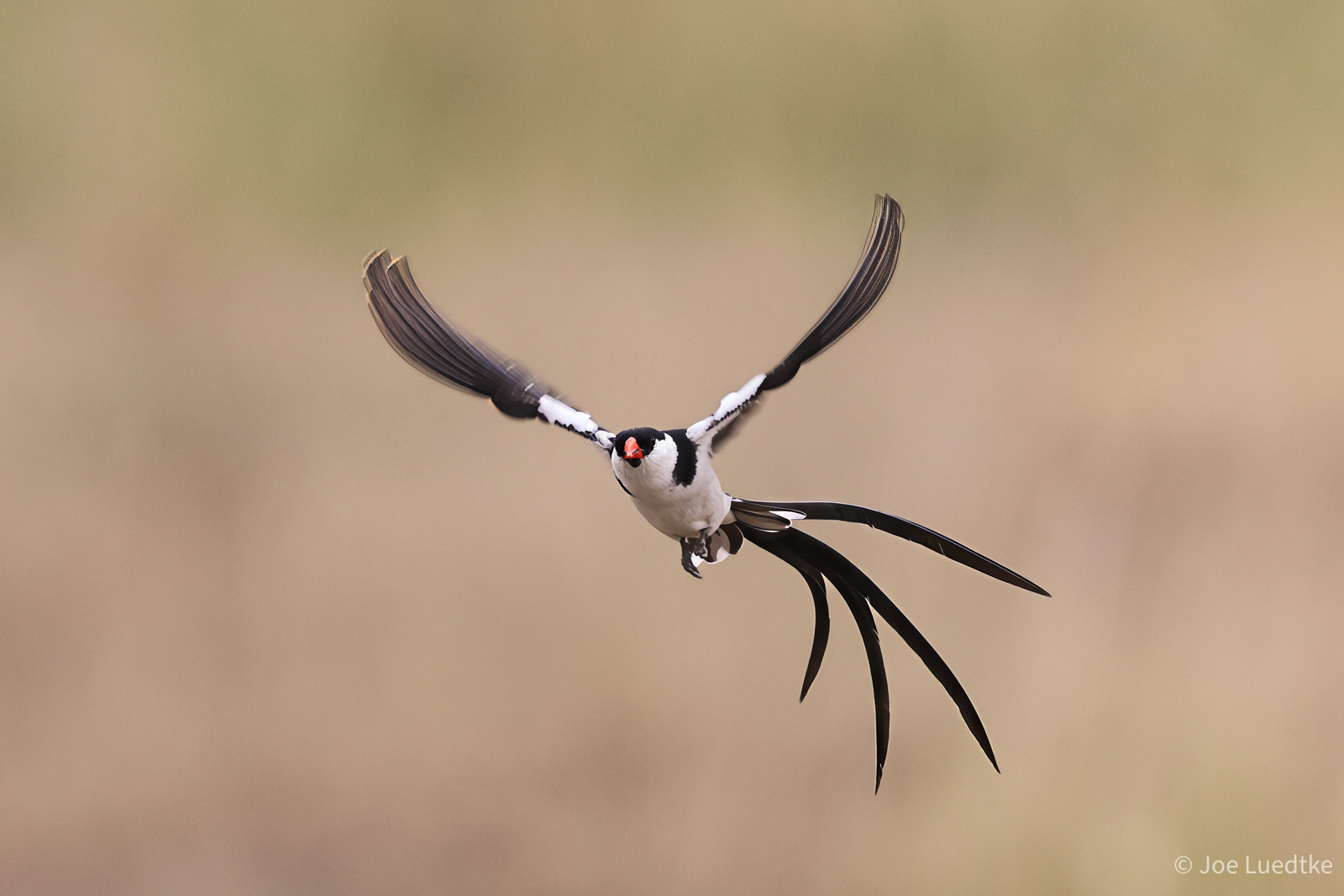
Unbelievable. Beauty and magic exist everywhere. You just need to open your eyes and mind.
One bird I hoped to see and did so almost immediately was the Secretary Bird. Very roadrunner like its behavior. The Secretary Bird gets its name from the quills sticking out of the back of its head which apparently reminded early explorers of secretaries and their ink quills kept behind their ear.

A Common Ostrich on the plains of the Serengeti. I didn't see any ostriches on my first day, but every day after that while in the Serengeti they were there. There's nothing "common" about a Common Ostrich in my mind except here they were quite easy to find.
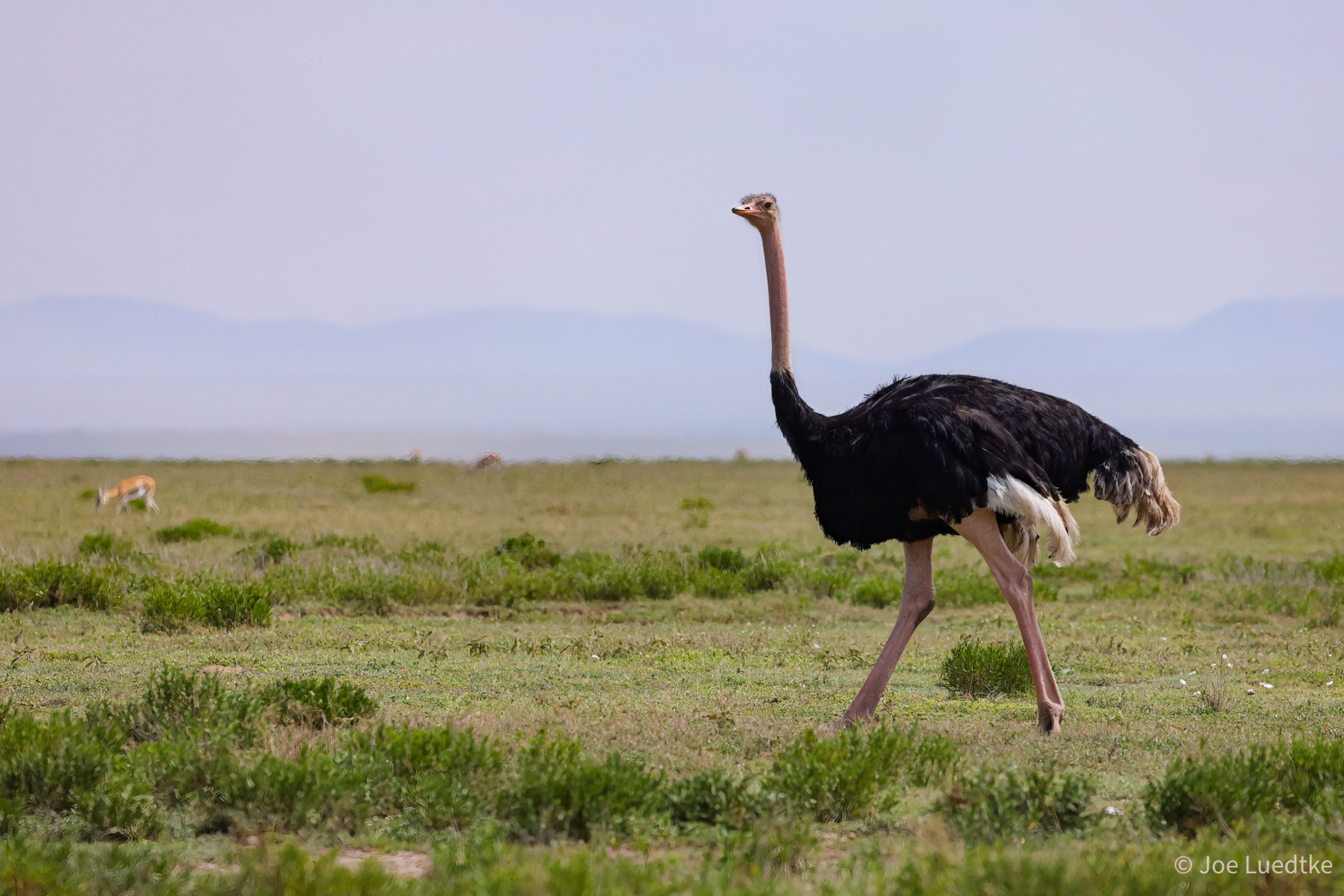
In addition to Ostriches we saw a few different Bustard species. Unlike ostriches, they can fly. The male Kori Bustard may be the heaviest bird in the world that can fly.
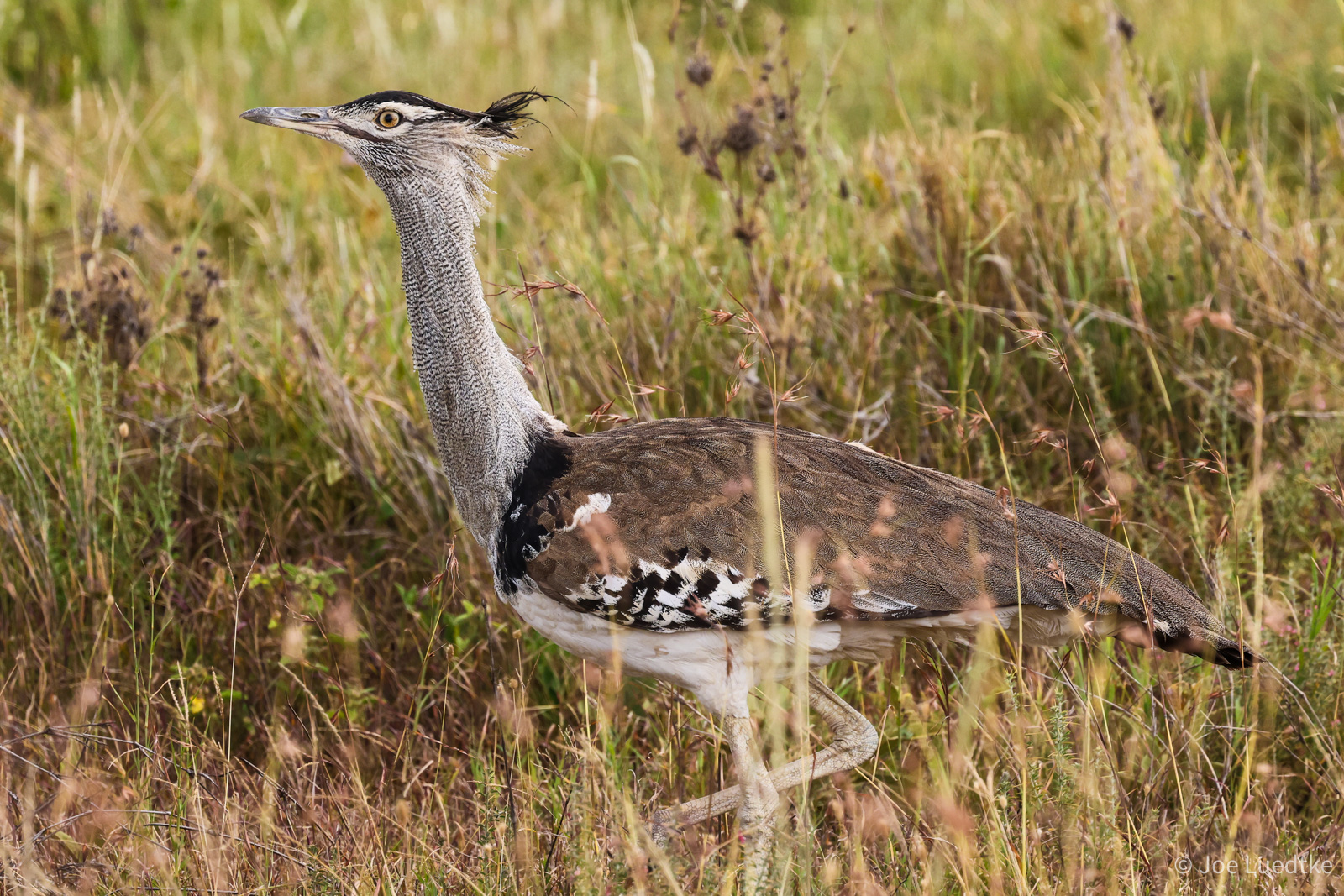
A Kori Bustard patrols the plains of the Serengeti
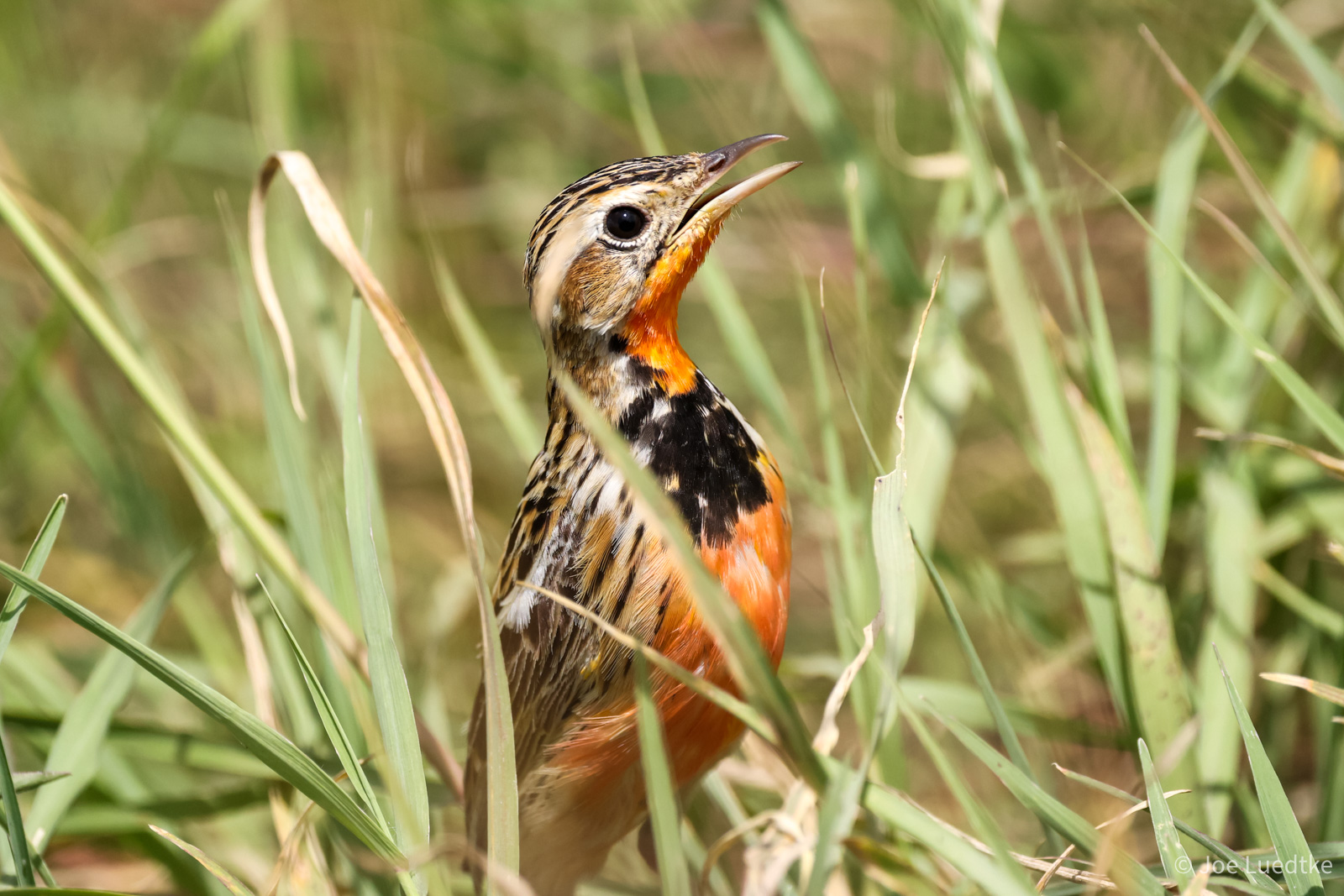
It looks like a meadowlark to me, but this Rosy-throated Longclaw is in the pipit family.
A brilliantly colored Southern Red Bishop poses in a marsh.

Seemingly always near water, this Southern Red Bishop perches on an ever present acacia bush.
Here a small flock of Grey Crowned-Cranes feed through the grass and sedges in the Ngorongoro Conservation Area.

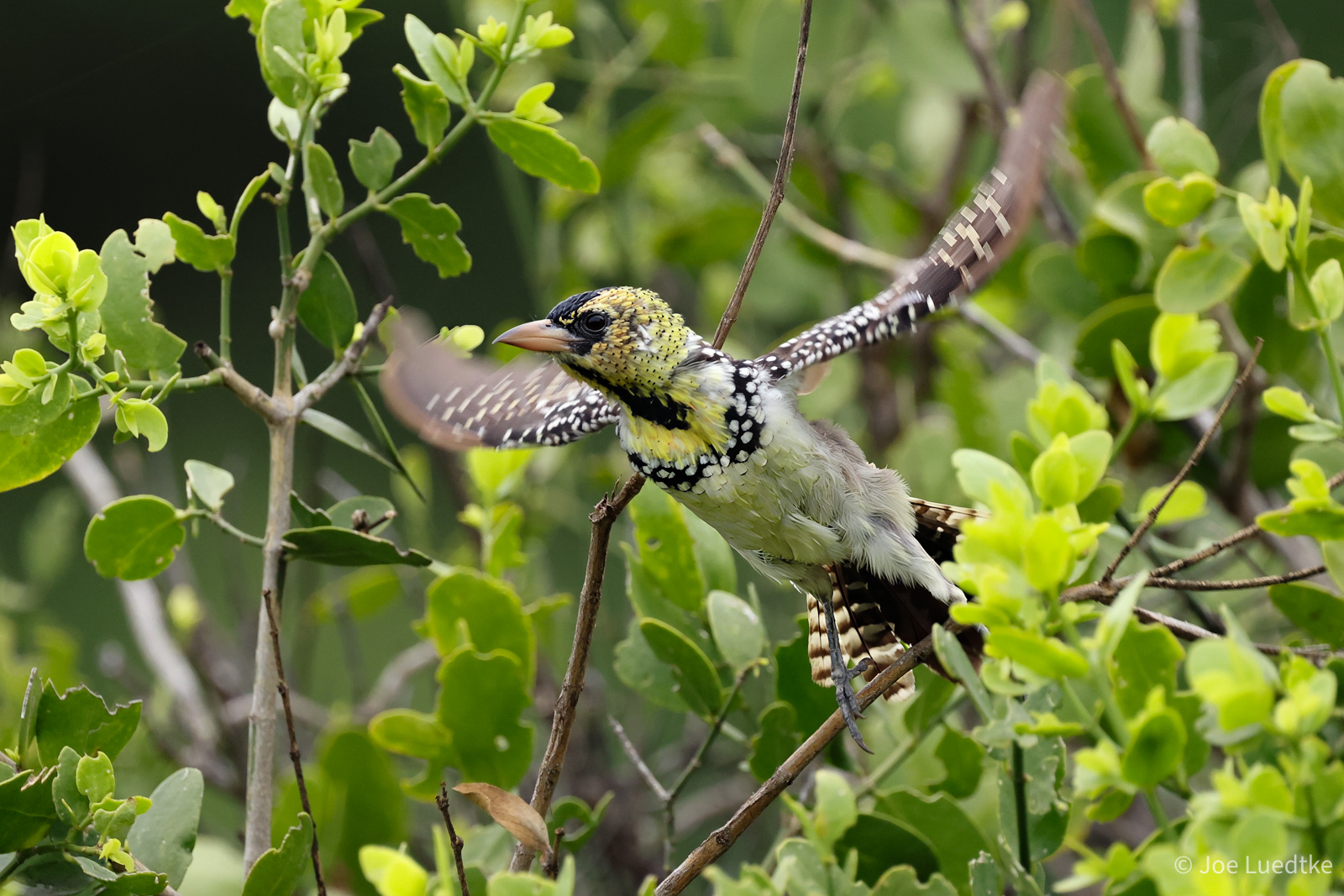
D’Arnaud’s Barbet takes flight in Tarangire National Park.
One of the frustrating things about the Serengeti is unlike a National Park in the US there are no hiking trails. You tour around in an older Land Cruiser decked out for off-road travel. It was a great vehicle, but I wanted to get out an explore which I only later found out you really can't do. You don't get out of you vehicle except in rare instances for lunch or to use the "bush toilet" (you go behind the truck). Why no hiking? Well.... In addition to all the birds, there's a lot of these!
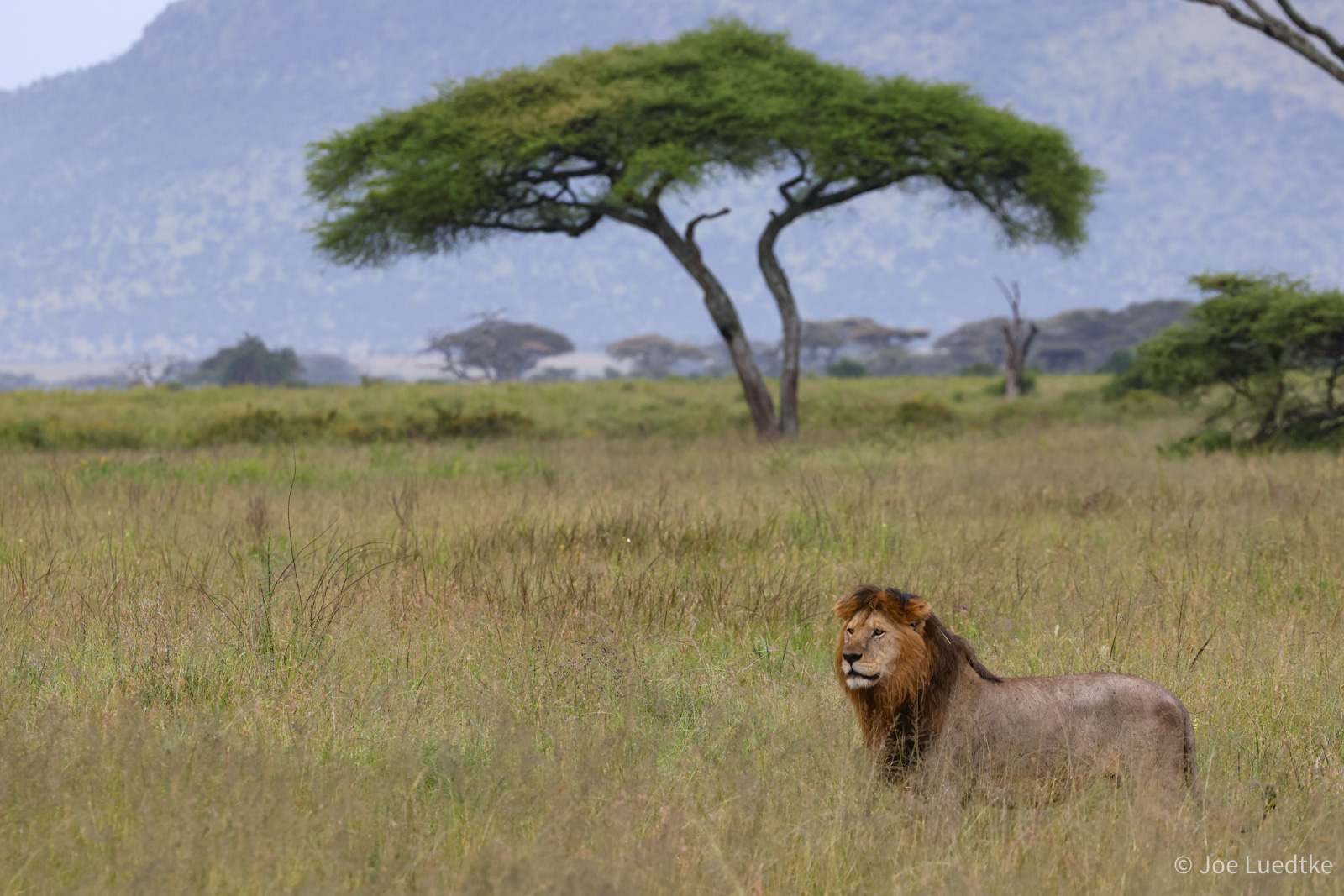
And also leopards, hyenas, cheetahs, and jackals. Besides the carnivores there's also hippos and cape buffalos that apparently have a rather ornery disposition.
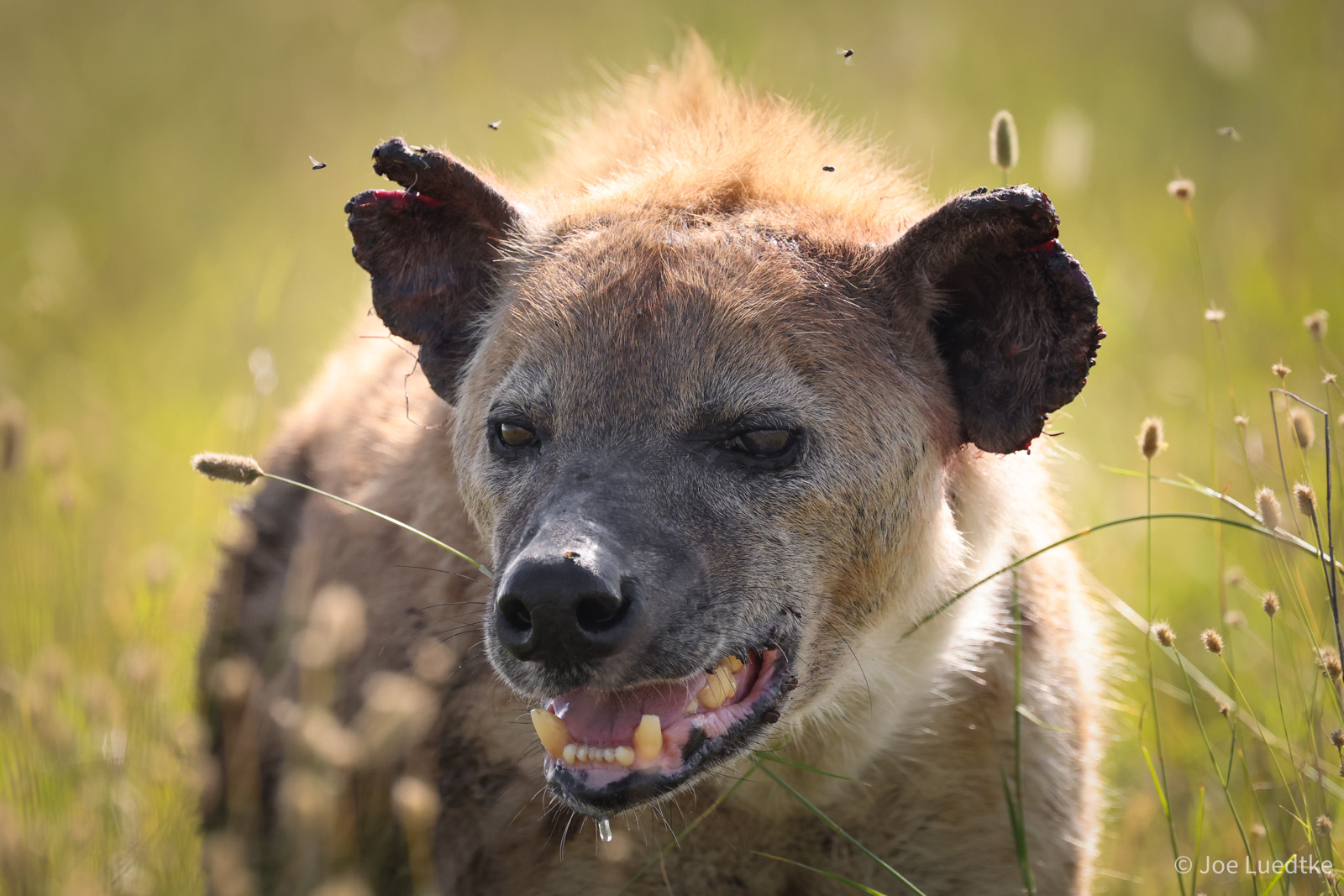
Here a Spotted Hyena peers through the grass. Those ears and teeth tell quite the story of past battles. At 4-5 feet long, this picture doesn't do these massive animals justice.
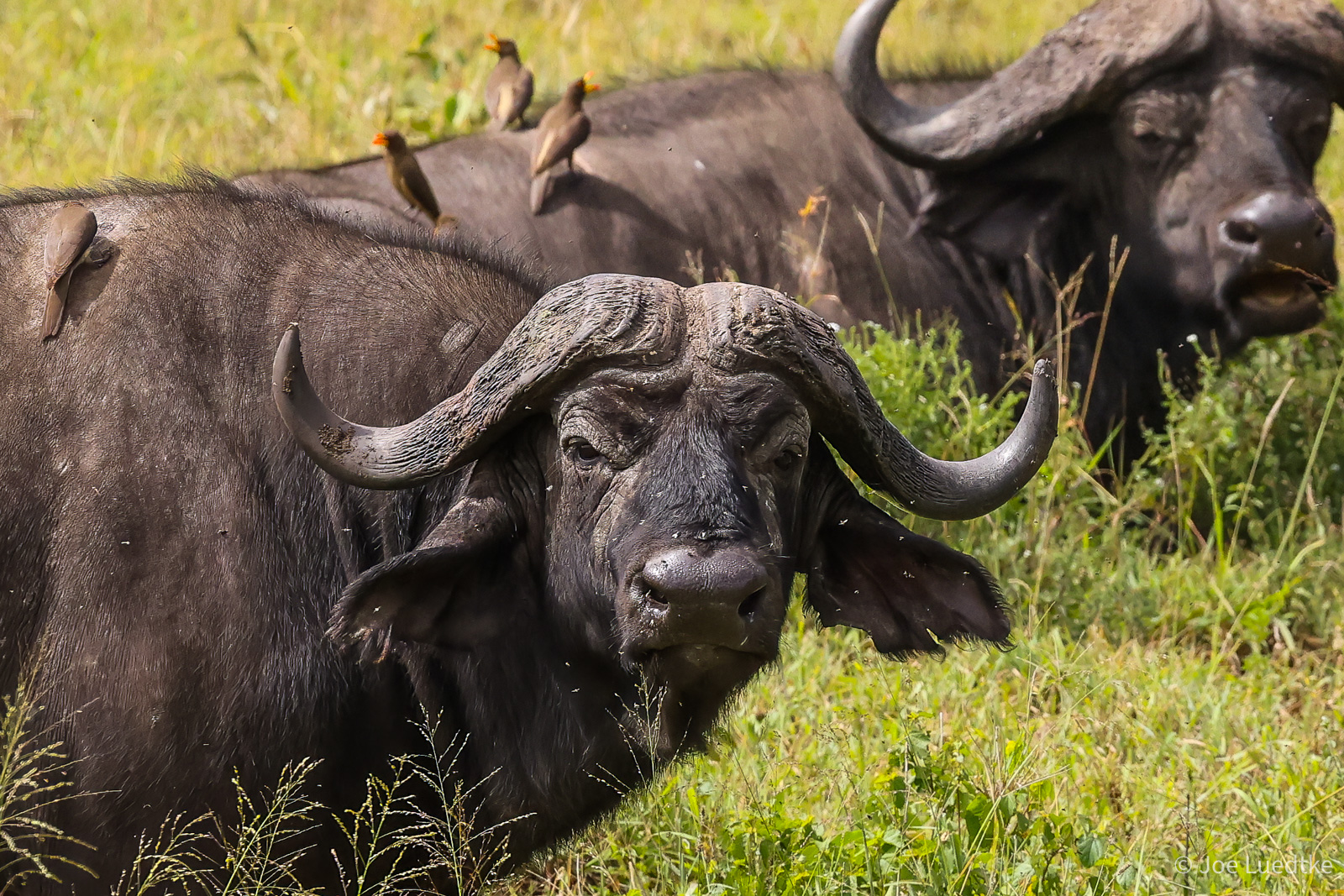
Here's some Cape Buffalos with some Yellow-billed and Red-billed Oxpeckers on them.
The Serengeti and other national parks were absolute treasures to behold. A saw a sign as we were leaving Serengeti National Park that said "Serengeti - The Last Eden". That sign my be all too correct!